Fat Pad Atrophy of the Forefoot and Heel in Laval | Panniculitis and Plantar Pain
Symptoms
- ✓Localized plantar pain
- ✓Sensation of walking "directly on bone"
- ✓Increased pain when walking or standing
- ✓Partial relief with cushioning shoes
- ✓Often mechanical pain, without nerve radiation
Treatments
- ✓Custom foot orthotics
- ✓Shoes with adequate cushioning
- ✓Impact activity adjustment
- ✓Surgery (very rare)
What is the Plantar Fat Pad?
Plantar fat pad atrophy of the forefoot or rearfoot (heel) is an often underdiagnosed cause of chronic plantar pain, particularly when walking or standing for prolonged periods.
The plantar fat pad is a structure composed of specialized fatty tissue, located under the metatarsal heads (forefoot) and under the calcaneus (heel). It plays an essential role in shock absorption, protection of bony structures and plantar pressure distribution.
At Clinique podiatrique de l'Avenir, our podiatrists in Laval evaluate plantar pain related to decreased natural foot cushioning, including fat pad atrophy and certain forms of panniculitis.
Fat Pad Atrophy
Fat pad atrophy corresponds to a decrease in thickness, quality or cushioning capacity of plantar fatty tissue. It can affect the forefoot (pain under the metatarsals) or rearfoot (mechanical heel pain). Recognized contributing factors include natural aging, chronic mechanical overload, repeated impact activities, significant weight loss, trauma history, certain general medical conditions and prolonged use of poorly cushioning shoes.
Forefoot and Heel Atrophy
When atrophy affects the forefoot, it can cause pain under the metatarsal heads, symptoms similar to metatarsalgia and increased sensitivity to plantar pressure. It can coexist with mechanical metatarsalgia, plantar plate, capsulitis and intermetatarsal bursitis.
At the heel, atrophy can be confused with plantar fasciitis or fasciosis. However, pain related to heel fat pad atrophy is often more central, more mechanical and less associated with morning stiffness.
Plantar Panniculitis
Panniculitis corresponds to inflammation of subcutaneous fatty tissue. At the plantar level, it can cause localized pain, marked sensitivity to pressure and discomfort when bearing weight. It can be associated with repeated trauma, excessive mechanical pressure and certain general inflammatory conditions.
Podiatric Evaluation
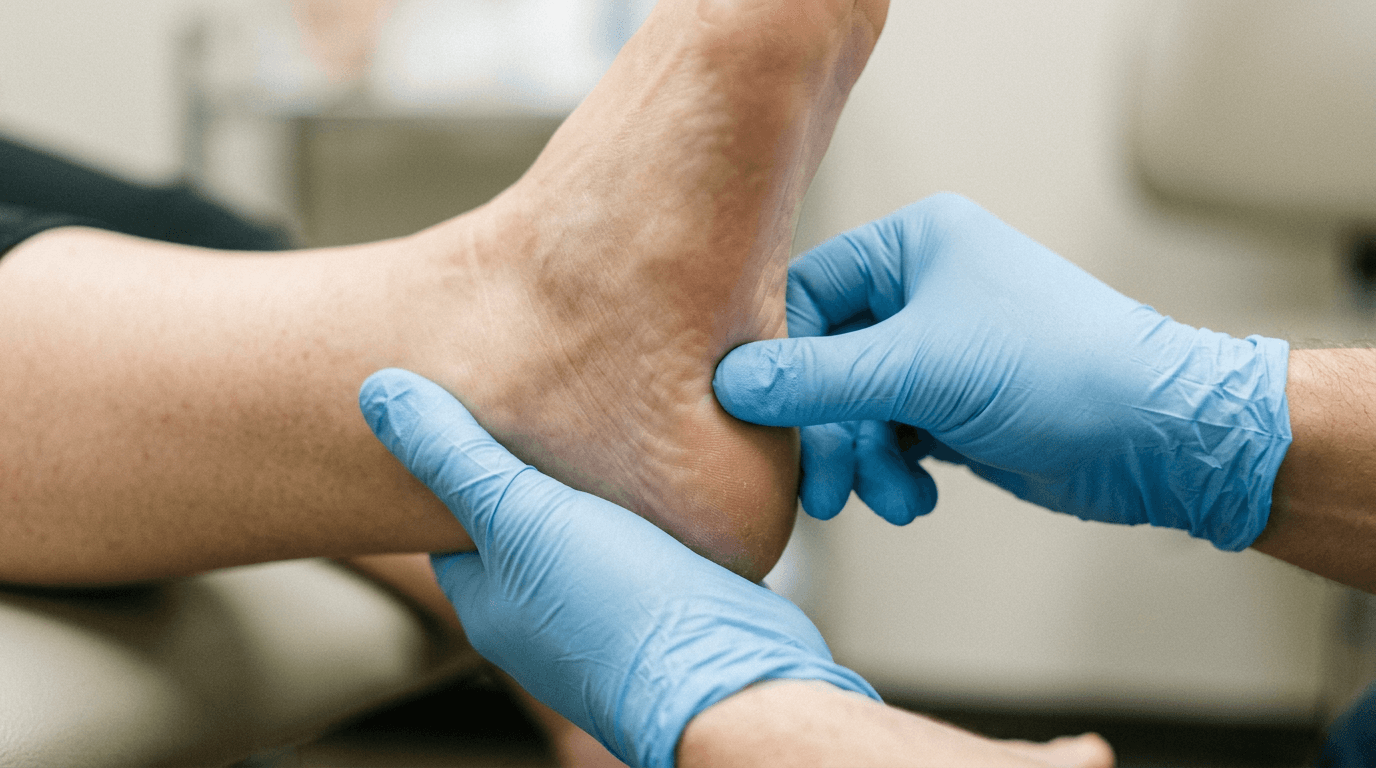
Evaluation includes clinical examination of the sole, pressure distribution analysis, biomechanical analysis, gait observation and shoe evaluation. Ultrasound can evaluate fat pad thickness and identify signs compatible with panniculitis.
Management Options
Conservative Approaches
Custom foot orthotics to improve cushioning and pressure redistribution, choice of shoes with adequate cushioning, impact activity adjustment and personalized clinical advice. Treatments aim to reduce pain and improve function, without claiming to restore the fat pad.
Surgery
Surgery is rarely indicated for fat pad atrophy and is only considered in very specific situations, after failure of conservative options.
When to See a Podiatrist?
Consult if plantar pain persists, if the direct impact sensation increases, if cushioning shoes are no longer sufficient or if pain limits walking or daily activities.
Do you have forefoot or heel plantar pain in Laval? Book an appointment with a podiatrist at Clinique podiatrique de l'Avenir for a complete evaluation and care in accordance with current standards.
Frequently Asked Questions
What is the plantar fat pad?
The plantar fat pad is a structure composed of specialized fatty tissue, located under the metatarsal heads (forefoot) and under the calcaneus (heel). It plays an essential role in shock absorption, protection of bony structures and plantar pressure distribution.
Fat pad atrophy or plantar fasciitis?
Heel fat pad atrophy can be confused with plantar fasciitis. Pain related to atrophy is often more central, more mechanical and less associated with morning stiffness.
Can treatments restore the fat pad?
Treatments aim to reduce pain and improve function, without claiming to restore the fat pad. Orthotics and cushioning shoes improve comfort and weight-bearing tolerance.
This content is for informational purposes and does not replace a professional consultation.