
Foot Bursitis in Laval | Retrocalcaneal, Intermetatarsal and Forefoot Bursitis
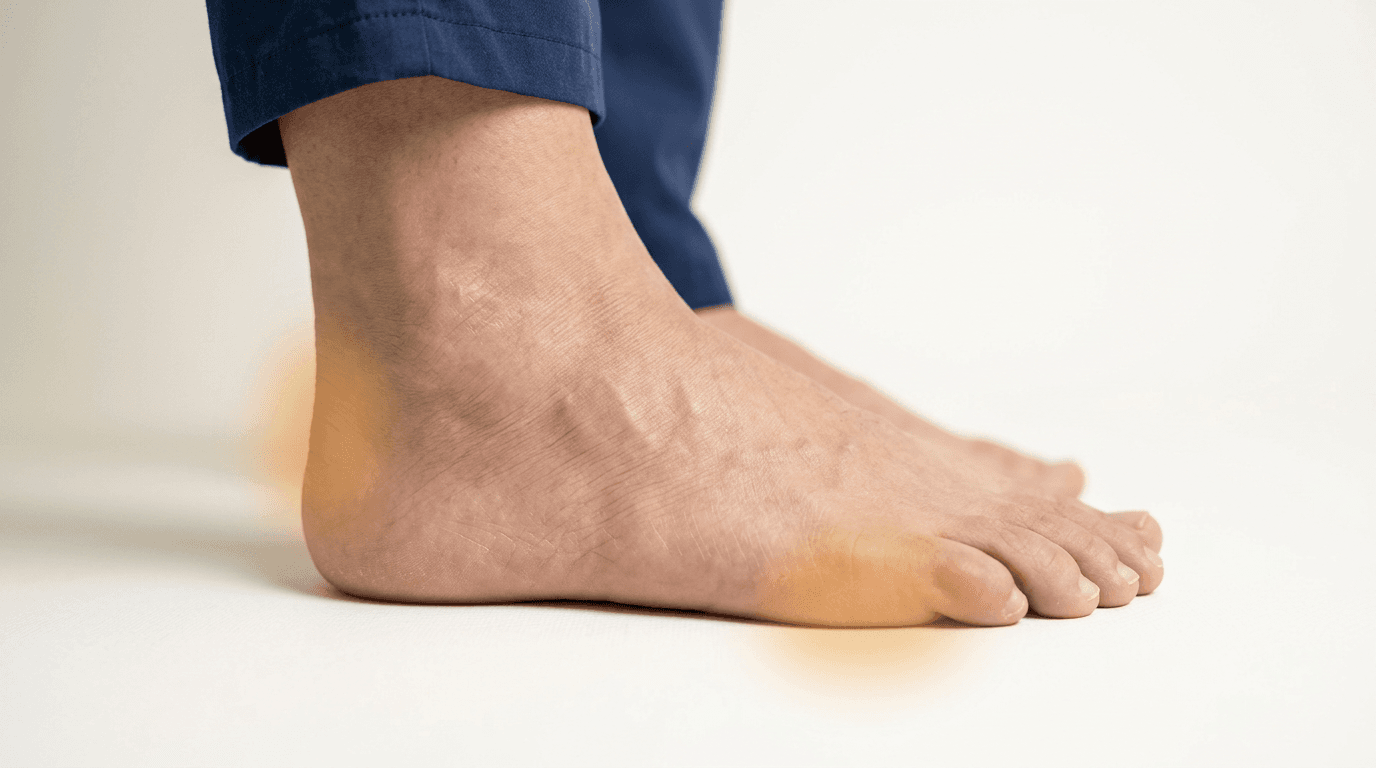
Symptoms
- ✓Localized pain with pressure
- ✓Swelling or lump
- ✓Increased pain when walking or exercising
- ✓Sensitivity to palpation
- ✓Discomfort with certain shoes
Treatments
- ✓Custom foot orthotics
- ✓Shoe and activity adjustment
- ✓Load and pressure modifications
- ✓PRP and hyaluronic acid (targeted cases)
- ✓Surgery (last resort)
What is foot bursitis?
Foot bursitis refers to inflammation of the bursae, small fluid-filled sacs that facilitate gliding between tendons, bone and skin. In the foot and ankle, several bursae can be affected, causing localized pain, swelling and discomfort when walking.
At Clinique Podiatrique de l'Avenir, our podiatrists in Laval provide evaluation and management of foot bursitis, including retrocalcaneal bursitis, intermetatarsal bursitis and forefoot bursitis, in accordance with the scope of practice recognized in Quebec.
Types of foot bursitis
Retrocalcaneal bursitis
Retrocalcaneal bursitis affects the bursa located between the Achilles tendon and the calcaneus (heel bone). It may be associated with Achilles tendinitis, shoes that rub the back of the heel or mechanical overload. Symptoms include pain at the back of the heel, localized swelling and increased pain when walking or rising on tiptoe.
Intermetatarsal bursitis
Intermetatarsal bursitis affects a bursa located between the metatarsal heads in the forefoot. It can cause symptoms very similar to Morton's neuroma: localized pain between two toes, sensitivity to pressure, increased pain when walking. Unlike neuroma, neurological symptoms (numbness, electric shocks) are generally less marked or absent.
Forefoot bursitis
Forefoot bursitis is often associated with repeated pressure under the metatarsals, inadequate shoes (narrow, high-heeled) or deformities such as hallux valgus. It may coexist with metatarsalgia, capsulitis or plantar plate injury.
Contributing factors
Foot bursitis can be favoured by repeated pressure on the bursae, inadequate or tight shoes, forefoot or heel deformities, impact sports activities and prolonged mechanical overload.
Podiatric evaluation
Evaluation includes a targeted clinical examination of the foot and ankle, palpation of painful areas, biomechanical analysis, gait observation and shoe evaluation. Musculoskeletal ultrasound can visualize bursa thickening or inflammation and help distinguish bursitis from neuroma or other conditions. X-ray can complete the diagnosis when necessary.
Management options
Conservative approaches
Custom foot orthotics to redistribute pressure and reduce load on the bursae, shoe adjustment (avoid rubbing, improve cushioning), activity modifications and personalized clinical advice.
Advanced therapeutic modalities
When symptoms persist: PRP (platelet-rich plasma) for certain chronic or refractory bursitis, hyaluronic acid when joint involvement is associated. These options are offered on a case-by-case basis, according to clinical indication.
Surgery
In certain specific situations, and only after failure of conservative and advanced treatments, a surgical option may be discussed as a last resort.
When to see a podiatrist?
Consult if you experience localized pain in the heel or forefoot, swelling or sensitivity to pressure in Laval. Book an appointment with a podiatrist at Clinique Podiatrique de l'Avenir for a complete evaluation and care in accordance with current standards.
Frequently Asked Questions
What is foot bursitis?
Bursitis is inflammation of a bursa, a small fluid-filled sac that facilitates gliding between structures (tendons, bone, skin). In the foot, the most common bursitis affects the heel (retrocalcaneal) or forefoot (intermetatarsal).
Bursitis or Morton's neuroma?
Both can cause similar symptoms in the forefoot. Intermetatarsal bursitis causes inflammation between the metatarsals; Morton's neuroma involves nerve involvement. A podiatric evaluation provides an accurate diagnosis.
How to treat foot bursitis?
Management focuses on reducing pressure (orthotics, shoes), activity adjustment and, if needed, modalities such as PRP or hyaluronic acid. Surgery is considered only as a last resort.
This content is for informational purposes and does not replace a professional consultation.