
Peripheral Circulation Problems of the Foot in Laval | Clinical Inspection and Referral
Symptoms
- ✓Cold or discolored feet
- ✓Pain when walking (claudication)
- ✓Slow wound healing
- ✓Skin color changes
- ✓Loss of hair on foot or leg
Treatments
- ✓Clinical inspection and detection
- ✓Referral for medical evaluation
- ✓Preventive foot care (at-risk patients)
- ✓Education and follow-up
Clinical Inspection of Peripheral Circulation
Peripheral circulation problems of the foot can affect blood supply to the lower limbs and have consequences for foot health: difficult healing, increased risk of ulceration, pain when walking (intermittent claudication) and, in severe cases, risk of complications. The podiatrist does not directly treat vascular conditions, but can perform a clinical inspection of circulation in patients with risk factors. This inspection aims to detect signs compatible with vascular involvement and refer the patient for complementary medical evaluation when required.
At Clinique Podiatrique de l'Avenir, our podiatrists in Laval provide clinical inspection of peripheral circulation as part of comprehensive foot evaluation, in accordance with the scope of practice recognized in Quebec. When vascular involvement is suspected, appropriate medical referral is indicated.
Role of the Podiatrist
Clinical Inspection
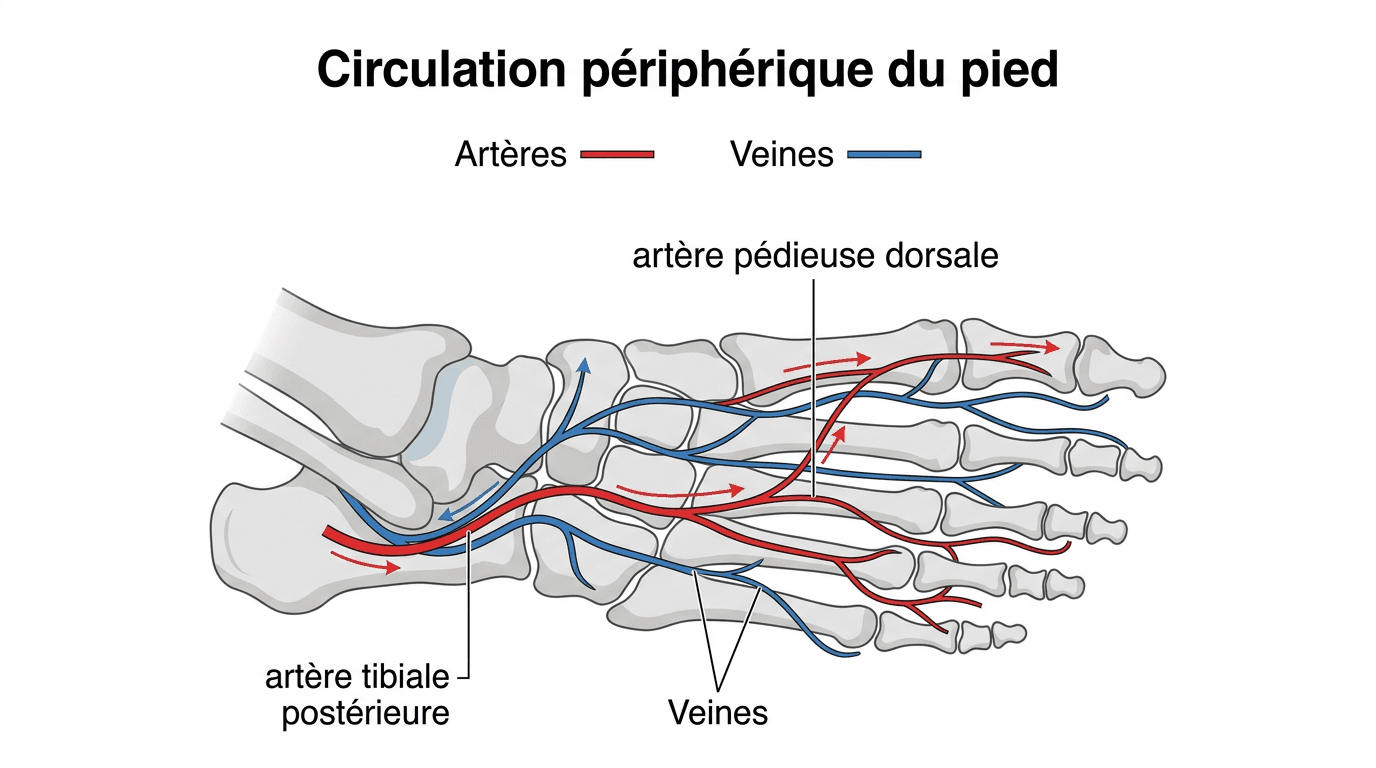
The clinical inspection performed by the podiatrist may include observation of skin color, foot temperature, presence of hair, nail condition and evaluation of peripheral foot pulses (dorsalis pedis, posterior tibial) when clinically indicated. These elements are part of routine foot examination in at-risk patients.
Detection and Referral
When signs compatible with peripheral circulation involvement are detected (cold feet, discoloration, wounds that do not heal, pain when walking, diminished or absent pulses), the podiatrist refers the patient to their physician or specialized evaluation (vascular specialist, vascular surgeon) for appropriate management. Complete vascular evaluation (Doppler, imaging) is the responsibility of the physician and their specialists.
Preventive Foot Care
In patients with vascular risk (diabetes, known arterial disease), the podiatrist provides preventive foot care (wound monitoring, education, complication prevention) in addition to medical follow-up. Management is multidisciplinary and coordinated with the treating physician.
Risk Factors
Risk factors for peripheral circulation involvement include diabetes, smoking, hypertension, high cholesterol, cardiovascular history (heart attack, stroke) and advanced age. Patients with these factors benefit from particular attention during podiatric evaluation.
Suggestive Signs and Symptoms
Signs that may suggest peripheral circulation involvement include cold or discolored feet, pain when walking (intermittent claudication), slow healing of wounds or cuts, skin color changes (pallor, redness, cyanosis) and loss of hair on the foot or leg. These signs are not diagnostic alone and require complementary medical evaluation.
Podiatric Evaluation
Podiatric foot evaluation includes, when risk factors exist, a clinical inspection of circulation. This inspection may be combined with sensitivity evaluation (neuropathies) and general foot examination. The podiatrist documents their observations and refers the patient for appropriate medical evaluation when required.
When to See a Podiatrist?
Consult a podiatrist if you have vascular risk factors (diabetes, smoking, cardiovascular history) and want a preventive foot evaluation in Laval. Book an appointment at Clinique Podiatrique de l'Avenir for a clinical inspection and referral in accordance with current standards. In case of acute signs (severe pain, cold and pale foot, worsening wound), consult a physician or emergency department immediately.
Frequently Asked Questions
What is the podiatrist's role regarding circulation?
The podiatrist performs a clinical inspection of peripheral circulation in patients with risk factors. They detect signs compatible with vascular involvement and refer to complementary medical evaluation (physician, vascular specialist) when required.
Does clinical inspection replace a vascular exam?
No. The podiatrist's clinical inspection aims to detect warning signs and refer the patient. Complete vascular evaluation (Doppler, etc.) is the responsibility of the physician or vascular specialist.
When does the podiatrist check circulation?
When risk factors exist (diabetes, smoking, cardiovascular history) or suggestive signs (cold feet, discoloration, wounds that do not heal, pain when walking).
This content is for informational purposes and does not replace a professional consultation.