
Hard corn and soft corn: causes, symptoms and treatments
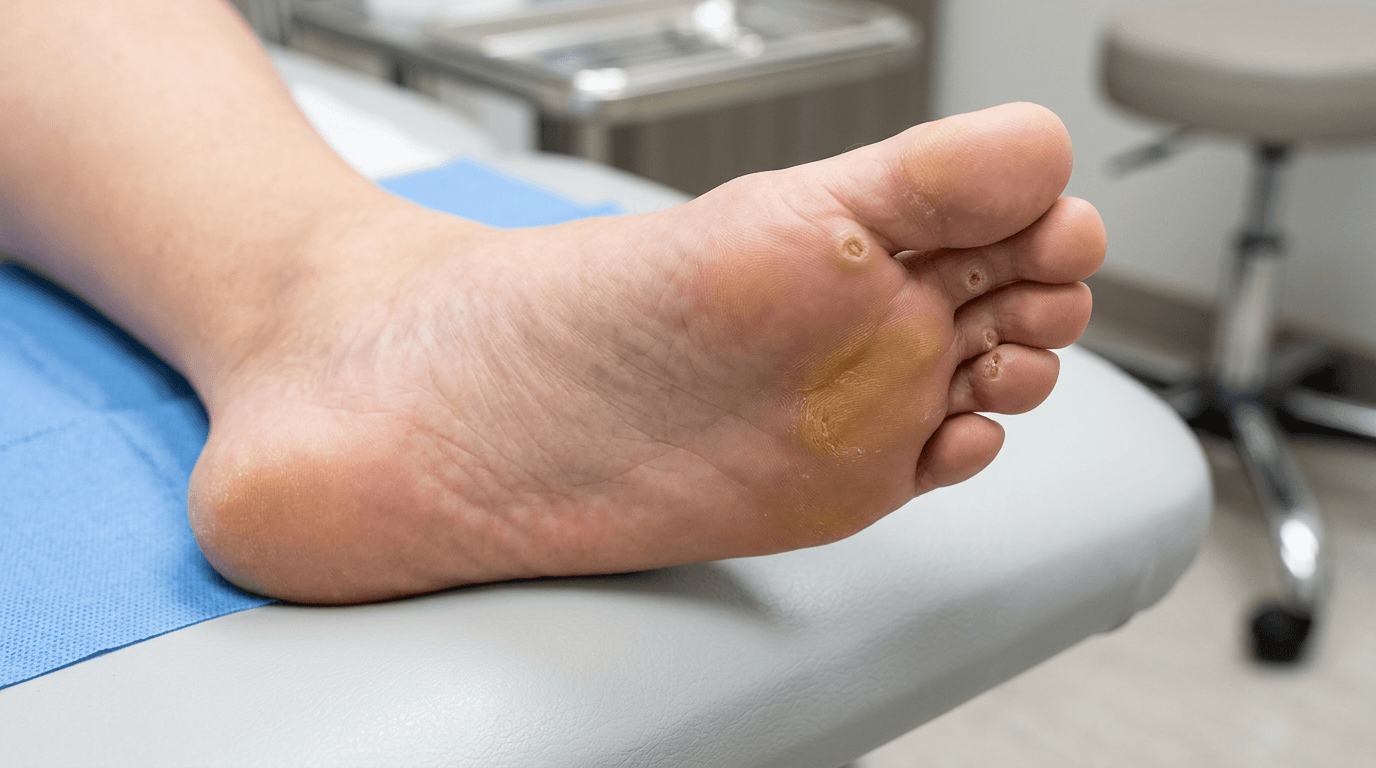
Symptoms
- ✓Thickened, hardened area of skin on top of or beside the toes
- ✓Localized pain on pressure or friction
- ✓Feeling of walking on a pebble
- ✓Whitish, moist skin between the toes (soft corn)
- ✓Increased discomfort in closed-toe shoes
Treatments
- ✓Professional debridement
- ✓Custom foot orthotics
- ✓Silicone orthoplasty
What is a foot corn?
A corn is a localized thickening of the skin that develops in response to repeated friction or pressure. It is a natural defense mechanism of the skin, but it can become very painful as it deepens. There are two main types: the hard corn (hard heloma) and the soft corn (soft heloma).
At our Laval clinic, corns are one of the most common reasons for podiatric consultations. They affect people of all ages but are particularly common in women and the elderly.
Hard corn and soft corn: the differences
The hard corn
The hard corn typically forms on top of the toes, at the tip of the toes or under the sole of the foot. It has a conical central core that extends into the deeper layers of the skin, causing sharp pain on pressure. Its surface is dry, hard and well-defined.
The soft corn
The soft corn develops between the toes, most often between the fourth and fifth toes. The natural moisture of this interdigital space prevents the keratin from fully hardening, giving the corn a whitish, spongy texture. It can be very painful and prone to fungal infections.
Causes and risk factors
Corns primarily form due to:
- Inadequate footwear: shoes that are too narrow, too tight or high-heeled increase pressure on the toes
- Foot deformities: a hammer toe, hallux valgus or claw toes create areas of abnormal friction
- Biomechanical imbalance: poor distribution of body weight during walking concentrates pressure on certain areas
- Repetitive activities: running or prolonged walking without appropriate footwear
Diagnosis
At our Laval clinic, corn diagnosis includes:
- Visual examination and palpation: identification of the corn type and pain assessment
- Biomechanical evaluation: gait analysis to identify sources of friction
- Footwear examination: checking fit and wear patterns
Treatments offered at our clinic
Professional debridement
Debridement involves gently removing the thickened skin layers and the central core of the corn using sterile instruments. This treatment provides immediate pain relief and is performed in the clinic without anesthesia.
Silicone orthoplasty
A custom orthoplasty is a small silicone device molded directly onto your toe. It protects the affected area, redistributes pressure and prevents corn recurrence.
Custom foot orthotics
Foot orthotics correct the biomechanical imbalances that contribute to corn formation. They redistribute pressures under the foot and prevent recurrences.
Prevention
- Choose shoes that provide enough room for the toes
- Avoid wearing high heels for extended periods
- Moisturize your feet daily to maintain skin suppleness
- Wear socks made of natural fibers to reduce friction
- See a podiatrist as soon as a painful skin thickening appears
Frequently Asked Questions
What is the difference between a hard corn and a soft corn?
A hard corn (hard heloma) forms on top of or at the tip of the toes, where the skin is subjected to friction against the shoe. It has a hard, painful central core. A soft corn (soft heloma) develops between the toes, where moisture and maceration make the skin whitish and spongy.
Is it dangerous to remove a corn yourself?
It is strongly advised against trying to cut or remove a corn yourself, as you risk infection or injury. A podiatrist has the sterile instruments and expertise needed to remove the corn safely.
How can you prevent foot corns?
Wear properly fitted shoes with enough room for the toes. Use foot orthotics if you have foot deformities. Moisturize your feet regularly and wear socks made of natural fibers to reduce friction.
This content is for informational purposes and does not replace a professional consultation.