
Plantar Fasciitis: Causes, Symptoms and Treatments
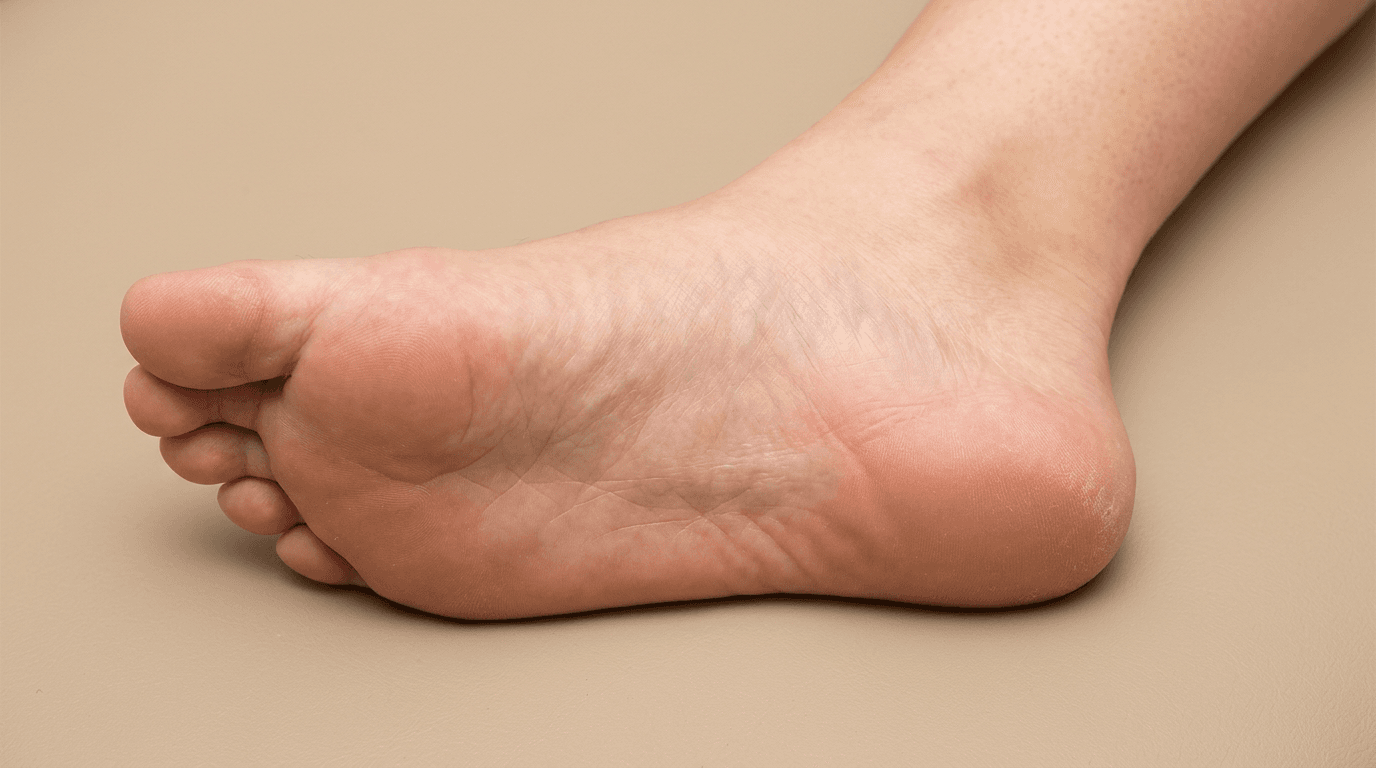
Symptoms
- ✓Sharp pain under the heel upon waking
- ✓Pain after a prolonged period of rest
- ✓Tenderness when palpating the heel
- ✓Pain that worsens after prolonged activity
Treatments
- ✓Custom foot orthotics
- ✓PRP treatment
- ✓Shockwave therapy
- ✓Stretching exercises
What is plantar fasciitis?
Plantar fasciitis is one of the most common causes of heel pain. It results from inflammation of the plantar fascia, a band of fibrous tissue that connects the heel bone (calcaneus) to the toes and supports the arch of the foot.
In our clinical practice in Laval, we find that plantar fasciitis affects both athletes and sedentary individuals. It is particularly common in adults aged 40 to 60, runners, and people who spend long hours standing.
Anatomy of the plantar fascia
The plantar fascia is an essential structure in foot biomechanics. It acts as a natural shock absorber and supports the arch of the foot during walking and running. When subjected to excessive or repetitive stress, micro-tears occur, triggering an inflammatory response and pain.
Symptoms of plantar fasciitis
Characteristic symptoms include:
- Heel pain in the morning: sharp pain with the first steps of the morning is the most typical symptom
- Pain after rest: pain returns after a prolonged period of sitting
- Progressive worsening: without treatment, pain intensifies over the weeks
- Pain after exertion: unlike other injuries, pain often appears after activity rather than during
Causes and risk factors
Biomechanical factors
- Flat feet or excessive overpronation
- High arches with tight fascia
- Leg length discrepancy
- Weakness in the foot or calf muscles
Lifestyle factors
- Prolonged standing (more than 8 hours per day)
- Sudden increase in physical activity
- Wearing unsupportive footwear (ballet flats, flip-flops, flat shoes)
- Excess weight
Diagnosis
At our Laval clinic, plantar fasciitis diagnosis includes:
- Clinical examination: heel palpation, pain assessment
- Biomechanical evaluation: gait and posture analysis
- X-ray: to rule out a stress fracture or identify a heel spur
- Ultrasound: to assess the thickness and condition of the fascia
Plantar fasciitis treatments at our clinic
Custom foot orthotics
Custom foot orthotics are the first-line treatment. They correct foot biomechanics, redistribute pressure, and support the arch to reduce tension on the fascia.
Exercises and stretches
A personalized exercise program including calf stretches, plantar fascia stretches, and intrinsic foot strengthening exercises.
PRP treatment (Platelet-Rich Plasma)
PRP treatment uses growth factors from your own blood to accelerate fascia healing. This option is recommended for chronic cases resistant to conservative treatments.
Shockwave therapy
Extracorporeal shockwave therapy stimulates tissue healing and reduces pain. This treatment is particularly effective for chronic fasciitis lasting more than 6 months.
Prevention
- Wear shoes with good arch support
- Stretch your calves and plantar fascia daily
- Gradually increase your physical activity
- Maintain a healthy weight
- See a podiatrist at the first signs of heel pain
Frequently Asked Questions
How long does plantar fasciitis last?
Without treatment, plantar fasciitis can persist for months or even years. With proper podiatric treatment (orthotics, exercises, PRP), the majority of patients experience significant improvement within 6 to 12 weeks.
Does plantar fasciitis heal on its own?
In some cases, plantar fasciitis may improve with rest, but it tends to become chronic without treatment. We recommend seeing a podiatrist as soon as symptoms appear to prevent worsening.
What is the difference between plantar fasciitis and a heel spur?
Plantar fasciitis is an inflammation of the plantar fascia, while a heel spur is a bony calcification on the heel. A heel spur is often a consequence of chronic fasciitis, but does not necessarily cause pain.
Is walking good for plantar fasciitis?
Moderate walking can be beneficial, but it is important to wear supportive shoes and, ideally, foot orthotics. Avoid prolonged walking on hard surfaces and going barefoot.
What exercises relieve plantar fasciitis?
Calf and plantar fascia stretches (rolling a ball under the foot, towel stretch upon waking) are the most effective. Your podiatrist can prescribe a personalized exercise program.
This content is for informational purposes and does not replace a professional consultation.