
Hallux Valgus: Causes, Symptoms and Treatments
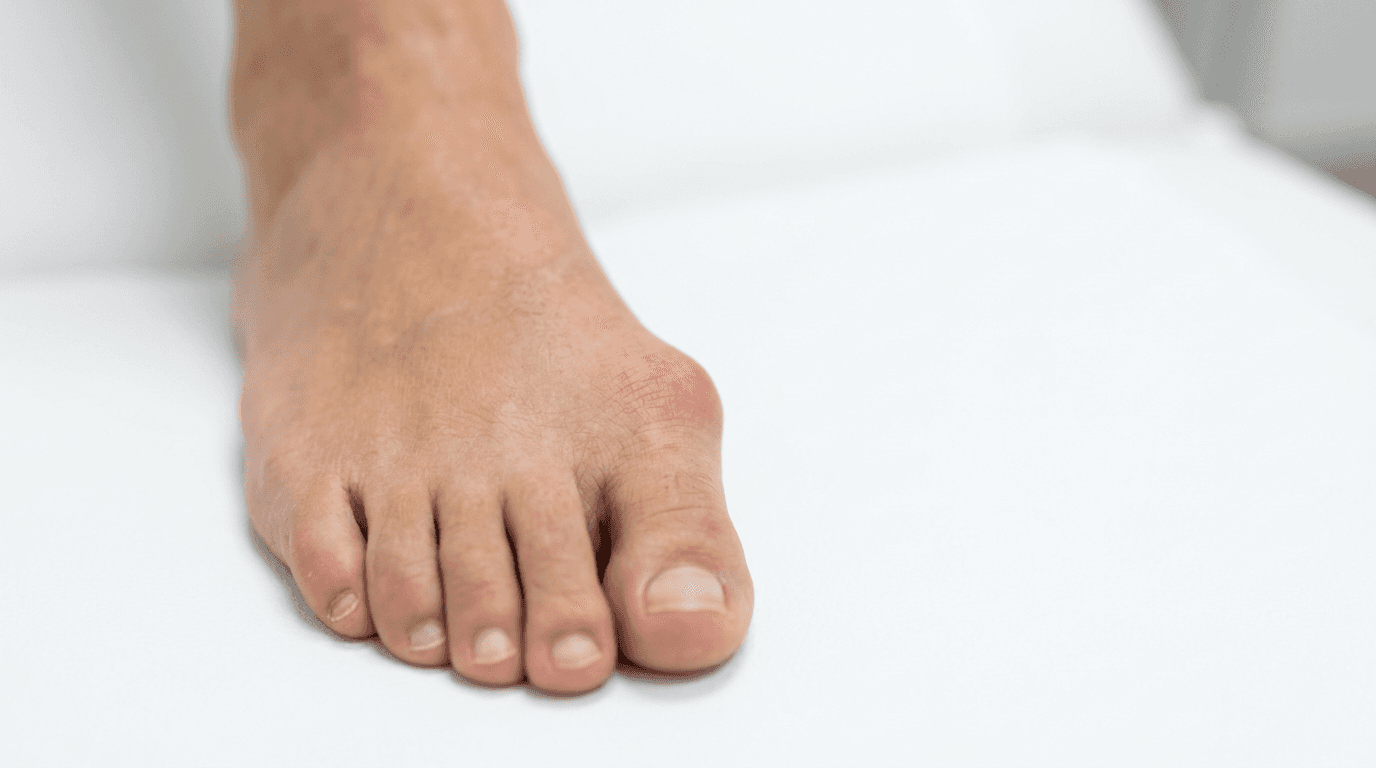
Symptoms
- ✓Bony bump on the inner side of the foot
- ✓Big toe deviation toward the other toes
- ✓Pain when walking or wearing shoes
- ✓Redness and inflammation around the joint
- ✓Difficulty finding comfortable shoes
Treatments
- ✓Custom foot orthotics
- ✓Corrective splint
- ✓Corrective surgery
- ✓Footwear advice
What is hallux valgus?
Hallux valgus, commonly known as a "bunion," is a progressive deformity of the first metatarsophalangeal joint. The big toe deviates toward the other toes, creating a bony prominence on the inner side of the foot. This condition affects approximately 23% of the adult population and is more common in women.
At our Laval clinic, we offer comprehensive management of hallux valgus, from diagnosis to conservative and surgical treatments, tailored to the stage of the deformity.
Causes of hallux valgus
Hallux valgus results from a combination of factors:
- Heredity: genetic predisposition is the primary risk factor. If a family member suffers from it, you are more likely to develop this condition
- Foot biomechanics: flat feet, hyperpronation, and joint hypermobility promote deviation of the big toe
- Inadequate footwear: prolonged wear of narrow or high-heeled shoes accelerates the progression of the deformity
- Medical conditions: rheumatoid arthritis and certain neuromuscular diseases can contribute to the development of hallux valgus
Symptoms of hallux valgus
The progression of hallux valgus manifests through:
- Visible bump: bony prominence on the inner side of the foot that becomes increasingly pronounced
- Joint pain: pain when walking, worsened by wearing tight shoes
- Inflammation: redness, swelling, and a sensation of warmth around the joint
- Progressive deformity: the big toe overlaps with the second toe in advanced cases
- Calluses: formation of corns and calluses due to friction and abnormal pressure
Stages of hallux valgus
- Mild stage: deviation less than 20 degrees, minimal pain
- Moderate stage: deviation of 20 to 40 degrees, regular pain when walking
- Severe stage: deviation greater than 40 degrees, constant pain and overlapping toes
Treatments offered at our clinic
Conservative treatments
- Custom foot orthotics: they correct foot biomechanics, reduce pressure on the joint, and slow the progression of the deformity
- Splints and toe spacers: worn at night, they maintain the big toe in better alignment and relieve pressure
- Footwear advice: our team guides you toward shoes suited to your foot shape to minimize irritation
Surgical treatment
When conservative treatments are no longer sufficient, corrective surgery may be considered. Our podiatrists evaluate each case individually to determine the most appropriate surgical technique based on the stage of the deformity and your lifestyle.
When should you see a podiatrist?
See a podiatrist if you notice a growing bump on the side of your foot, if pain limits your daily activities, or if you have difficulty finding comfortable shoes. Early management offers better treatment options and can significantly slow the progression.
Prevention
- Choose shoes with a wide toe box that provides enough room for the toes
- Avoid wearing high heels daily
- Wear foot orthotics if you have a family predisposition
- Do toe strengthening and mobility exercises
- See a podiatrist at the first signs of deviation
Frequently Asked Questions
Can hallux valgus be corrected without surgery?
Conservative treatments such as foot orthotics, splints, and toe spacers can slow the progression of hallux valgus and relieve pain. However, only surgery can permanently correct the bony deformity. Your podiatrist will assess the stage of your condition to recommend the most appropriate approach.
At what age does hallux valgus appear?
Hallux valgus can develop at any age, but it is more common after 40. In teenagers, it is referred to as juvenile hallux valgus, often linked to a hereditary predisposition. The earlier the condition is detected, the more effective conservative treatment options are.
What shoes should I wear with hallux valgus?
Choose shoes with a wide, rounded toe box, good arch support, and a heel of less than 4 cm. Avoid pointed shoes and high heels that worsen the deviation. Your podiatrist can guide you toward styles suited to your foot shape.
This content is for informational purposes and does not replace a professional consultation.