
Nail Fungus: Causes, Symptoms and Treatments
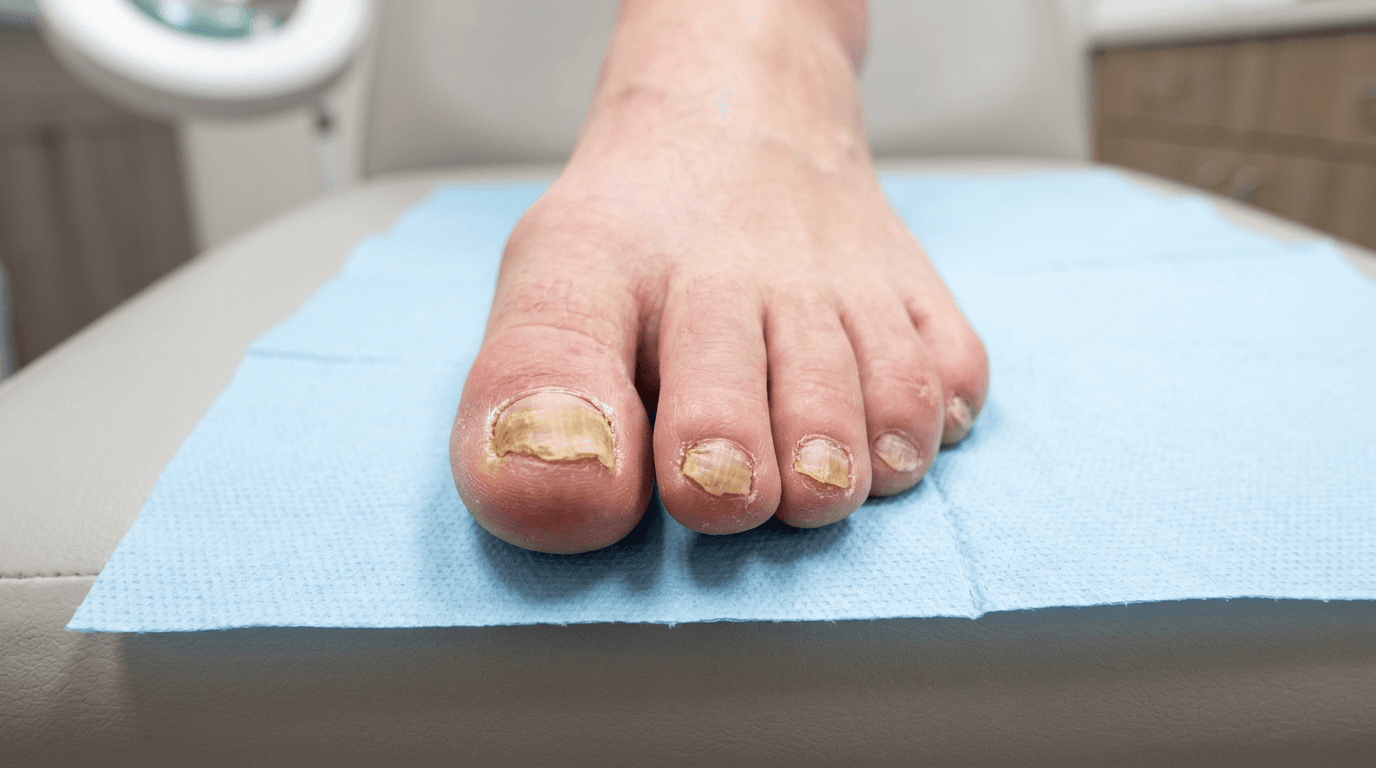
Symptoms
- ✓Abnormal thickening of the nail
- ✓Yellowish, brownish or whitish discolouration of the nail
- ✓Brittle nail that crumbles or separates
- ✓Unpleasant odour from the affected nail
- ✓Progressive deformation of the nail plate
Treatments
- ✓Topical antifungal treatment
- ✓Debridement of the fungal nail
- ✓Antifungal laser treatment
What Is Nail Fungus?
Nail fungus, also called onychomycosis, is a fungal infection of the nail caused primarily by dermatophytes, yeasts or moulds. It most often affects the toenails due to the warm, moist environment created by footwear.
At our Laval clinic, we observe that nail fungus affects approximately one in ten people and becomes more common with age. Although it is often considered a cosmetic issue, untreated nail fungus can lead to complications, particularly in people with diabetes.
Symptoms of Nail Fungus
The characteristic signs of nail fungus include:
- Colour change: the nail turns yellow, brown, greenish or chalky white
- Thickening: the nail progressively thickens and becomes difficult to trim
- Fragility: the nail crumbles, cracks or separates from the nail bed
- Deformation: the nail plate becomes misshapen and may become painful in shoes
- Odour: an unpleasant smell may accompany advanced infections
Causes and Risk Factors
How Do You Contract Nail Fungus?
The fungi responsible for nail fungus thrive in warm, moist environments. Contamination most commonly occurs in:
- Sports centre locker rooms and showers
- Public pools and saunas
- Non-sterilized pedicure salons
Predisposing Factors
- Age: reduced blood circulation and slower nail growth increase the risk
- Diabetes: poorly controlled blood sugar promotes fungal infections
- Athlete's foot: this fungal skin infection can spread to the nails
- Excessive sweating: a moist environment encourages fungal growth
- Nail trauma: an injured nail is more vulnerable to infections
Diagnosis
At our Laval clinic, the diagnosis of nail fungus includes:
- Clinical examination: visual assessment of the nail and surrounding tissues
- Mycological sampling: a nail sample is analyzed in a laboratory to identify the type of fungus involved
- Differential diagnosis: ruling out nail psoriasis, lichen planus or chronic trauma
Treatments Offered at Our Clinic
Nail Debridement
Debridement involves reducing the thickness of the affected nail to allow better penetration of topical treatments. This procedure is performed in the clinic using sterile instruments.
Topical Antifungal Treatments
Applying antifungal solutions or lacquers directly to the nail is the first-line treatment for mild to moderate fungal infections. Consistency in application is essential for treatment success.
Laser Treatment
The antifungal laser targets fungi through the nail plate without damaging healthy tissue. This option is particularly effective for infections resistant to topical treatments.
Prevention
- Keep your feet clean and dry, especially between the toes
- Wear sandals in locker rooms and public showers
- Change your socks daily and choose moisture-wicking fibres
- Regularly disinfect your shoes with an antifungal spray
- Never share your nail care instruments
- Promptly treat any athlete's foot infection to prevent spreading
Frequently Asked Questions
How long does it take to cure nail fungus?
Treating nail fungus generally takes 6 to 12 months, the time needed for the healthy nail to grow back completely. The duration depends on the severity of the infection and the chosen treatment. Regular follow-up with your podiatrist allows the treatment to be adjusted as needed.
Is nail fungus contagious?
Yes, nail fungus is caused by fungi that can be transmitted through direct contact or contaminated surfaces. It is important not to share your nail clippers, to wear sandals in public showers and to treat the infection promptly to prevent spreading.
Can you put nail polish on a fungal nail?
It is not recommended to put cosmetic nail polish on a nail affected by fungus, as it traps moisture and prevents topical treatment from penetrating. Your podiatrist may recommend an antifungal medicated nail lacquer as an alternative.
This content is for informational purposes and does not replace a professional consultation.