
Ingrown toenails: causes, symptoms and treatments
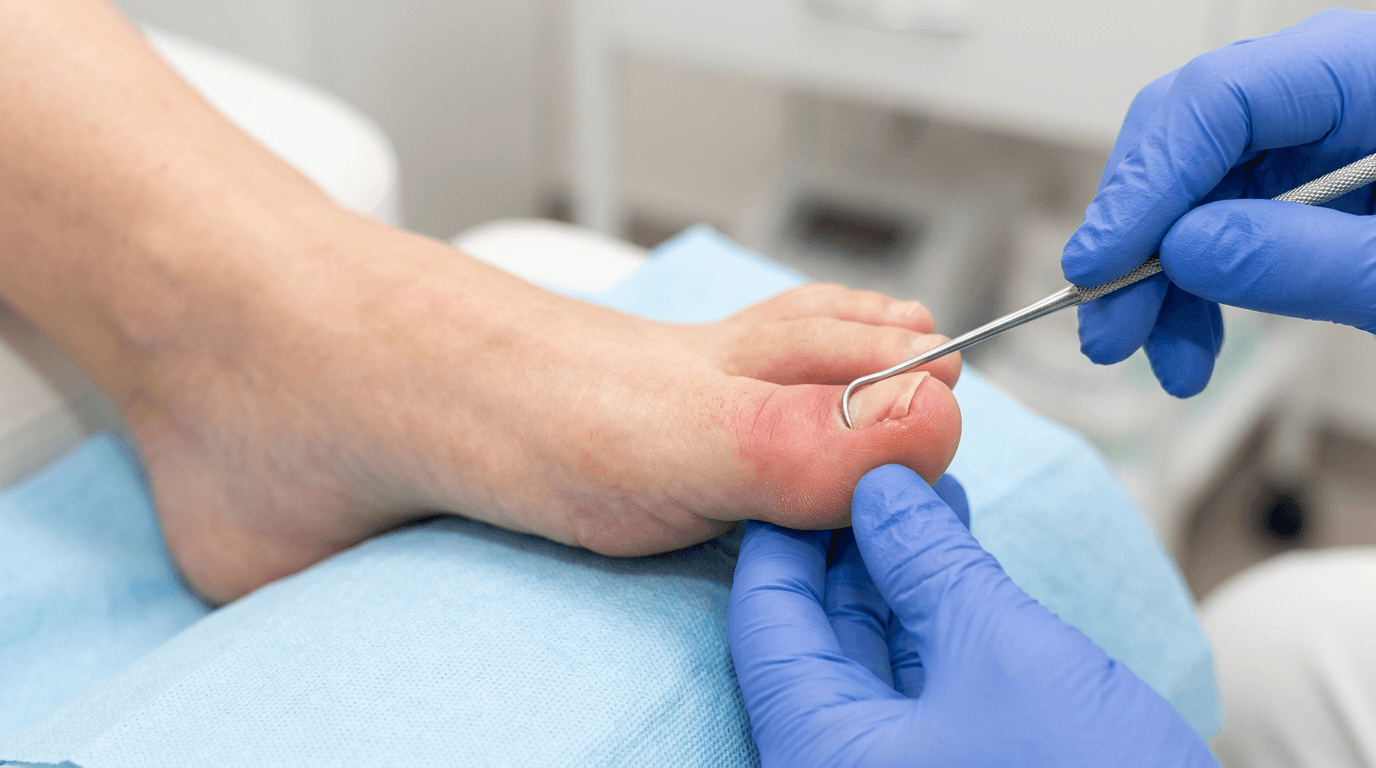
Symptoms
- ✓Pain and tenderness along the nail border
- ✓Redness and swelling around the nail
- ✓Discharge or pus in case of infection
- ✓Difficulty wearing closed-toe shoes
- ✓Granulation tissue (excess flesh)
Treatments
- ✓Podiatric nail care
- ✓Partial matricectomy
- ✓Orthonyxia (nail correction)
- ✓Topical antibiotic therapy
What is an ingrown toenail?
An ingrown toenail (onychocryptosis) occurs when the edge of a nail penetrates the surrounding skin, causing pain, inflammation and sometimes infection. This condition most often affects the big toe and can occur in people of all ages, from teenagers to the elderly.
At our Laval clinic, ingrown toenail treatment is one of our most common procedures. Our podiatrists provide fast, effective care to relieve pain and prevent recurrences.
Causes of ingrown toenails
Several factors contribute to the development of ingrown toenails:
- Improper nail trimming: cutting nails too short or in a rounded shape is the most common cause. The nail corners then dig into the skin as the nail grows back
- Ill-fitting shoes: shoes that are too narrow put pressure on the toes and force the nail into the skin
- Nail shape: some people inherit naturally curved or thick nails, which predisposes them to ingrown toenails
- Trauma: a blow to the toe, a sports injury or the loss of a nail can alter its growth
- Excessive perspiration: moisture softens the skin and makes it easier for the nail to penetrate
Symptoms to watch for
Ingrown toenails generally progress through three stages:
Stage 1 — Mild inflammation
- Redness and tenderness along the nail border
- Slight pain when touched or in shoes
Stage 2 — Infection
- Increased pain and noticeable swelling
- Clear fluid or pus discharge
- Difficulty walking comfortably
Stage 3 — Granulation
- Formation of granulation tissue (excess red, budding flesh)
- Significant pain and persistent infection
- Bleeding at the slightest contact
Treatments at our clinic
Podiatric nail care
For mild to moderate cases, our podiatrists gently remove the portion of nail that is penetrating the skin. This treatment provides immediate relief and is performed in a sterile environment.
Partial matricectomy
For recurrent or severe ingrown toenails, partial matricectomy is the gold standard treatment. Under local anesthesia, the podiatrist removes the problematic nail portion and applies a chemical agent to the matrix to prevent regrowth of that section. This procedure prevents recurrences in over 95% of cases.
Orthonyxia
Orthonyxia involves placing a splint or corrective wire on the nail to gradually modify its curvature. This non-invasive technique is indicated for overly curved nails (involuted nails) before they become ingrown.
Complementary care
In case of infection, a topical or oral antibiotic treatment may be prescribed in addition to the podiatric intervention.
When should you see a podiatrist?
See a podiatrist promptly if you notice signs of infection (pus, spreading redness, intense pain), if the pain prevents you from walking normally or if the problem recurs frequently. People with diabetes or immunosuppression should consult at the first signs, as complications can be more serious.
Preventing ingrown toenails
- Trim your nails straight across, following the natural shape of the toe, without rounding the corners
- Maintain an adequate length: the nail should reach the tip of the toe
- Wear shoes that provide enough room for the toes
- Keep your feet clean and dry
- Avoid pulling or tearing your nails
- See a podiatrist for regular nail care if you are predisposed
Frequently Asked Questions
Can an ingrown toenail heal on its own?
A mild ingrown toenail may sometimes improve with home care (soaking, proper trimming). However, if the pain persists, if the nail is infected or if the problem recurs regularly, podiatric treatment is necessary to avoid complications and recurrences.
Does ingrown toenail treatment hurt?
The treatment is performed under local anesthesia, making the procedure virtually painless. Most patients experience immediate relief after the problematic nail portion is removed. Recovery is generally quick, with a return to normal activities within a few days.
How can ingrown toenails be prevented?
Trim your nails straight across without rounding the corners, and do not cut them too short. Wear shoes that provide enough room for your toes. If you are predisposed to ingrown toenails, regular podiatric care can prevent recurrences.
This content is for informational purposes and does not replace a professional consultation.