
Pathological Toenails in Laval | Onychomycosis, Psoriasis and Traumatic Nails
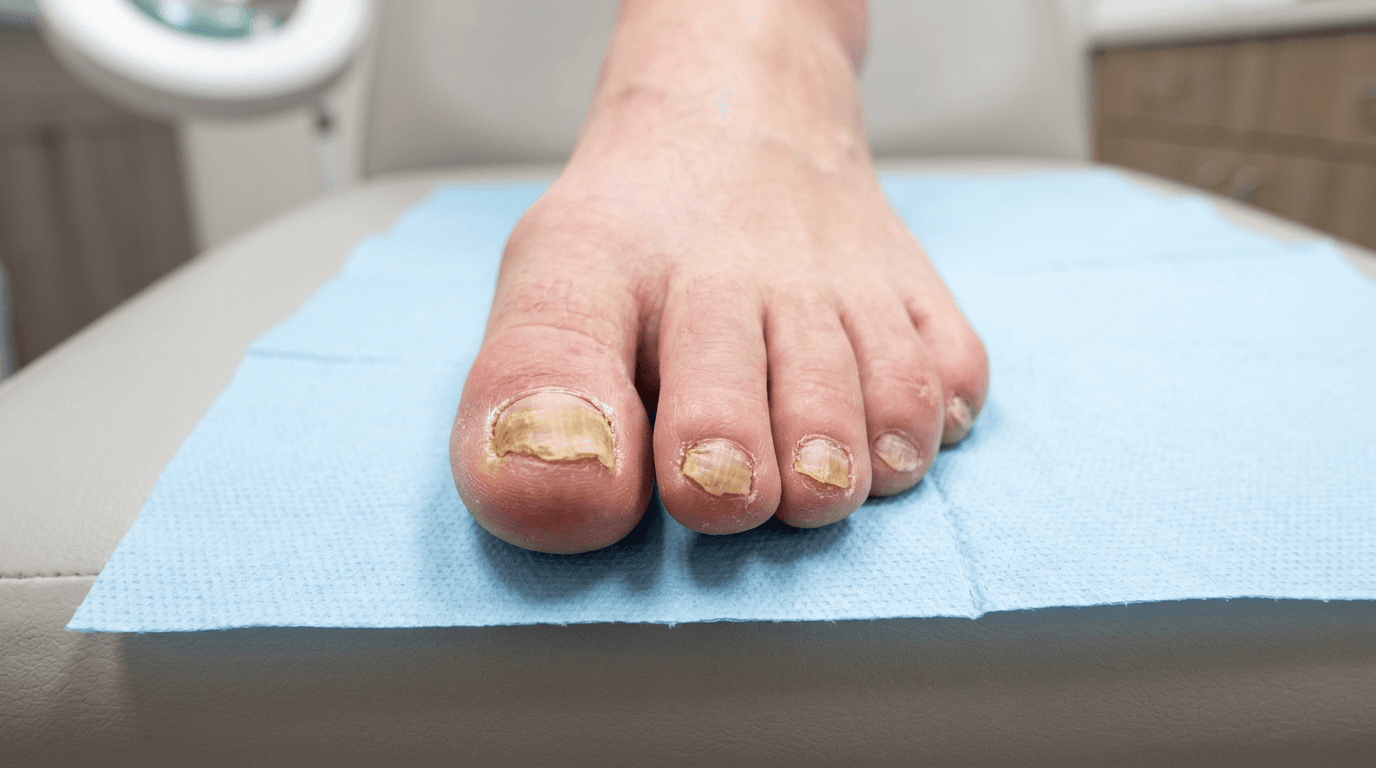
Symptoms
- ✓Progressive nail thickening
- ✓Discoloration (yellow, whitish or brownish)
- ✓Friability or crumbling
- ✓Nail deformation
- ✓Discomfort when wearing shoes
Treatments
- ✓Professional debridement
- ✓Pressure and thickness reduction
- ✓Hygiene and prevention advice
- ✓Cutera Genesis laser (onychomycosis)
Why Toenails Change
Thickened, deformed or discolored toenails can have several origins, notably infectious, inflammatory or traumatic. Precise identification of the cause is essential to avoid inadequate or ineffective treatments.
Toenails are particularly exposed to repeated microtrauma, mechanical pressure (shoes, sport), prolonged humidity and slow nail growth. These factors explain why persistent or recurrent conditions are frequent.
At Clinique podiatrique de l'Avenir, our podiatrists in Laval provide clinical evaluation of pathological nails, distinction between different causes and appropriate podiatric management.
Onychomycosis (Fungal Nail Infection)
Onychomycosis is a fungal infection affecting the nail, which can affect the nail plate, nail bed and sometimes the nail matrix. Common signs and symptoms include progressive nail thickening, discoloration (yellow, whitish or brownish), friability or crumbling, nail deformation and discomfort when wearing shoes. Favoring factors include chronic humidity, repeated trauma, prolonged wear of closed shoes, hyperhidrosis, advanced age, diabetes or immunosuppression.
Psoriatic Nails
Psoriatic nails are related to psoriasis, a chronic inflammatory condition that can affect the nail with or without visible skin involvement. Possible manifestations include pitted depressions, nail detachment (onycholysis), nail thickening, discoloration and irregular or fragile surface. Psoriatic nails are non-contagious.
Traumatic Nails
Traumatic nails result from repeated or acute trauma, often related to sports activities, shoes that are too tight or direct impacts. They are common in runners, athletes and standing workers. Possible manifestations include nail thickening, discoloration (often brownish or black), permanent deformation, partial nail detachment and local sensitivity or pain. Traumatic nails can mimic onychomycosis without real fungal infection.
Podiatric Evaluation
Evaluation includes clinical nail examination, analysis of distribution and appearance of involvement, evaluation of mechanical factors and identification of risk factors. When required, the podiatrist may recommend diagnostic confirmation or complementary medical referral.
Podiatric Management
Management aims to improve comfort, function and nail appearance, without promise of cure. Care includes professional debridement of thickened nails, pressure and thickness reduction, hygiene and prevention advice. According to the identified condition: approach adapted to onychomycosis, conservative approach for psoriatic nails, mechanical management of traumatic nails and medical referral when necessary.
Available Technology
Cutera Genesis can be used as a complementary modality in the management of certain onychomycoses, according to clinical evaluation. In accordance with Health Canada requirements, no laser treatment can be presented as guaranteeing cure of onychomycoses.
At-Risk Patients
Particular attention is required in people living with diabetes, people with peripheral neuropathy and immunosuppressed people.
When to See a Podiatrist?
Do you have thickened, deformed or discolored nails in Laval? Book an appointment with a podiatrist at Clinique podiatrique de l'Avenir for a complete evaluation and care in accordance with current standards.
Frequently Asked Questions
How to distinguish onychomycosis, psoriasis and traumatic nail?
Onychomycosis is a fungal infection. Psoriatic nails are related to psoriasis (non-contagious). Traumatic nails result from repeated trauma and can mimic onychomycosis without real infection. A podiatric evaluation is essential.
Can laser cure onychomycosis?
In accordance with Health Canada requirements, no laser treatment can be presented as guaranteeing cure of onychomycosis. Cutera Genesis can be used as a complementary modality according to clinical evaluation.
When to consult?
Consult if a nail changes appearance or thickens, if pain appears, if several nails are affected, if the nail becomes difficult to cut or if you are diabetic or at risk.
This content is for informational purposes and does not replace a professional consultation.