
Hammer Toe: Causes, Symptoms and Treatments
Symptoms
- ✓Abnormal flexion of the toe at the central joint
- ✓Pain on top of the toe when wearing shoes
- ✓Formation of corns or calluses on the deformed toe
- ✓Difficulty moving the affected toe
- ✓Redness and inflammation at the joint
Treatments
- ✓Silicone orthoplasty
- ✓Custom foot orthotics
- ✓Corrective taping
- ✓Corrective surgery
What Is a Hammer Toe?
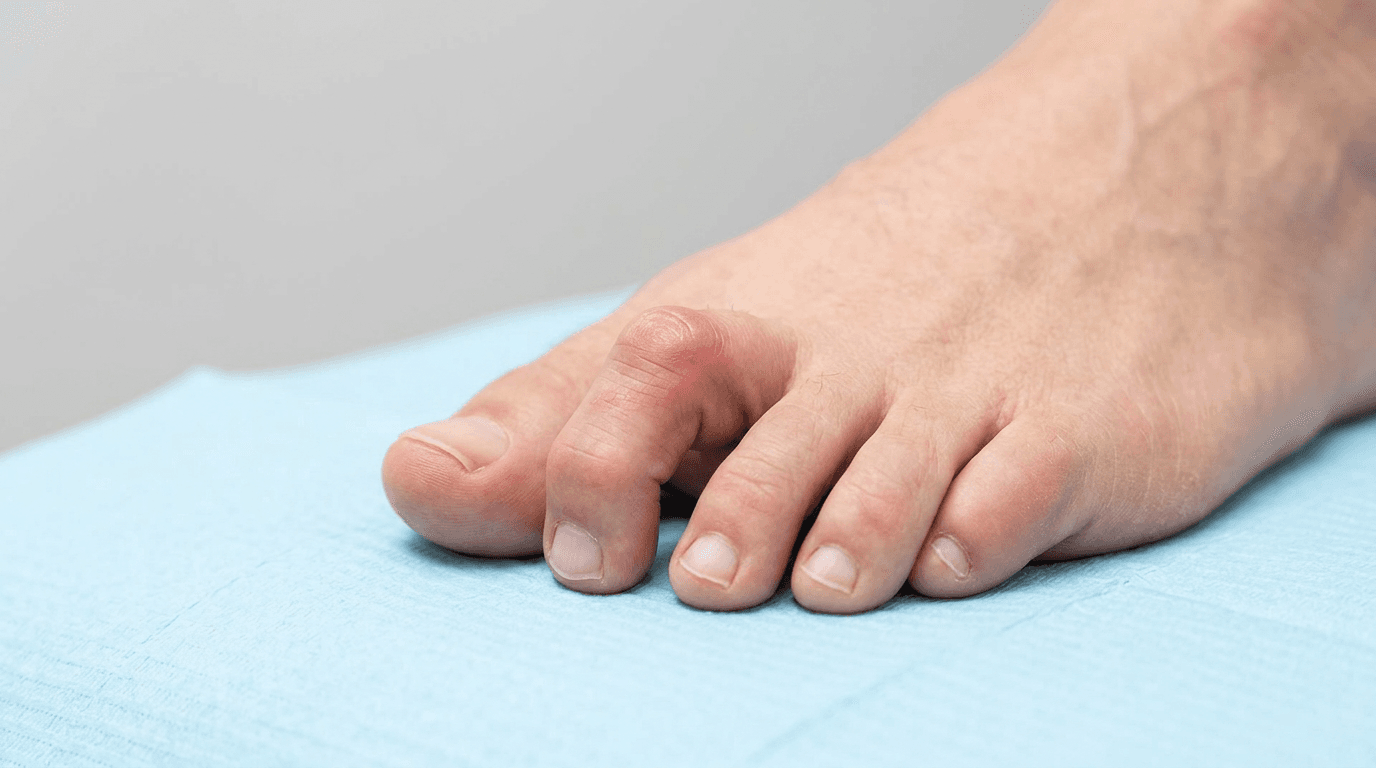
A hammer toe is a common deformity characterized by an abnormal flexion of the proximal interphalangeal joint of a toe, giving it a curved shape resembling a hammer. The second toe is most frequently affected, but this condition can affect any toe.
At our Laval clinic, we regularly see patients suffering from hammer toes. This deformity affects women more often and becomes more common with age. Early treatment can often prevent the need for surgery.
Types of Deformity
Flexible Hammer Toe
In the early stage, the toe can still be straightened manually. The joint retains some mobility, and conservative treatments are generally effective at this stage.
Rigid Hammer Toe
Over time, the tendons and ligaments contract permanently. The toe becomes fixed in its bent position and can no longer be straightened without surgical intervention.
Causes and Risk Factors
Biomechanical Factors
- Muscle imbalance: an imbalance between the flexor and extensor muscles of the toe causes the abnormal flexion
- Hallux valgus: a bunion can push the second toe upward, creating a hammer deformity
- Foot type: a second toe longer than the big toe (Greek foot) is more predisposed
External Factors
- Inappropriate footwear: shoes that are too narrow, too short or high-heeled force the toes into a curled position
- Trauma: a fracture or injury to the toe can alter joint alignment
Associated Medical Conditions
- Rheumatoid arthritis or osteoarthritis
- Diabetes with peripheral neuropathy
- Neuromuscular diseases
Symptoms
Hammer toe symptoms include:
- Visible deformity: the toe presents an abnormal flexion at the central joint
- Pain and discomfort: especially when wearing closed shoes
- Corns and calluses: skin lesions form at friction points, on top of the toe or at the tip
- Joint stiffness: increasing difficulty moving the toe
- Inflammation: redness and swelling around the joint
Diagnosis
At our Laval clinic, the diagnosis includes:
- Clinical examination: evaluation of the toe's flexibility and the severity of the deformity
- Biomechanical assessment: gait analysis and foot structure evaluation
- X-ray: to visualize joint alignment and rule out other conditions
Treatments Offered at Our Clinic
Silicone Orthoplasty
A custom-moulded silicone device protects the deformed toe, reduces friction inside the shoe and can help gradually reposition the toe.
Custom Foot Orthotics
Foot orthotics correct the biomechanical imbalances that contribute to the deformity. They redistribute pressure and stabilize the foot inside the shoe.
Exercises and Stretches
An exercise program aimed at strengthening the intrinsic muscles of the foot and stretching the contracted tendons can help maintain the toe's flexibility.
Corrective Surgery
When conservative treatments are insufficient and the deformity is rigid, surgery may be considered to permanently straighten the toe.
Prevention
- Wear shoes with a wide and sufficiently deep toe box
- Limit wearing high heels to short periods
- Practice daily toe flexibility exercises
- Consult a podiatrist at the first sign of deformity, even if mild
Frequently Asked Questions
Can a hammer toe be corrected without surgery?
Yes, in the early stages when the toe remains flexible, conservative treatments such as silicone orthoplasties, foot orthotics and stretching exercises can slow the progression and relieve pain. The earlier the deformity is treated, the better the chances of non-surgical correction.
Does hammer toe get worse over time?
Without treatment, hammer toe tends to progressively stiffen. An initially flexible toe can become rigid and fixed, making non-surgical correction more difficult. It is therefore recommended to consult a podiatrist at the first signs of deformity.
What shoes should you wear with a hammer toe?
Choose shoes with a wide and deep toe box that provide enough room for the toes. Avoid heels higher than 5 cm and pointed-toe shoes. Your podiatrist can advise you on the best models for your condition.
This content is for informational purposes and does not replace a professional consultation.