
Athlete's Foot: Causes, Symptoms and Treatments
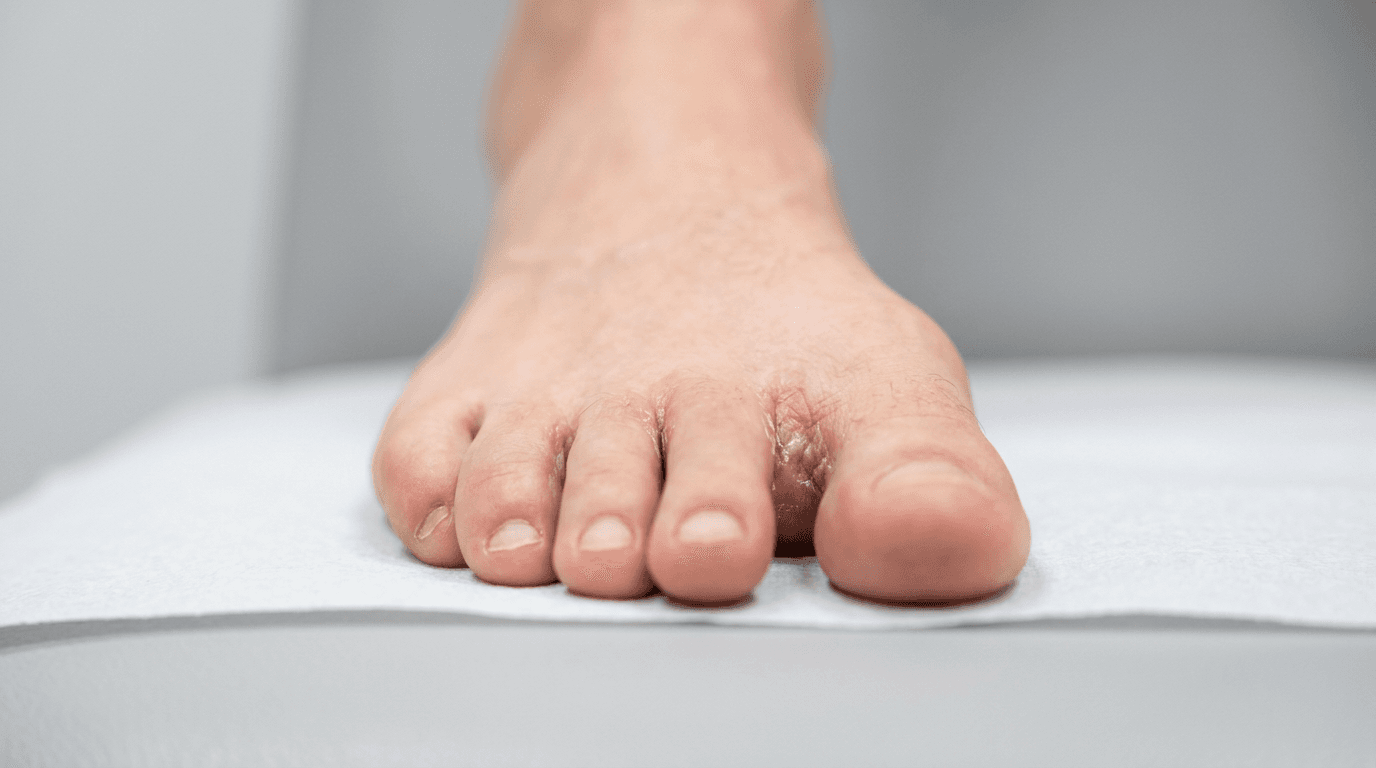
Symptoms
- ✓Intense itching between the toes
- ✓Red, cracked or peeling skin between the toes
- ✓Burning sensation on the sole of the foot
- ✓Small blisters or vesicles on the foot's skin
- ✓Dry, scaly skin on the sides or sole of the foot
Treatments
- ✓Topical antifungal treatment
- ✓Oral antifungal treatment
- ✓Podiatric care for skin lesions
What Is Athlete's Foot?
Athlete's foot, or tinea pedis, is a fungal infection of the skin of the foot caused primarily by dermatophyte fungi. Despite its name, this condition does not only affect athletes: anyone exposed to warm, moist environments can contract it.
At our Laval clinic, athlete's foot is one of the most frequently treated skin infections. It affects approximately 15 to 25% of the population and is particularly common in adult men.
Clinical Forms of Athlete's Foot
Interdigital Form
This is the most common form. The infection appears between the toes, primarily between the fourth and fifth toes. The skin becomes whitish, moist, cracked and itchy.
Moccasin Form
The infection extends to the sole and sides of the foot, causing dry, thickened and scaly skin. This form is often chronic and can be mistaken for eczema or ordinary dry skin.
Vesicular Form
Fluid-filled blisters appear on the sole of the foot or the arch. This form is less common but can be very uncomfortable.
Causes and Risk Factors
Athlete's foot is caused by fungi that thrive in warm, moist environments. The main risk factors include:
- Excessive sweating: feet that sweat profusely create an ideal environment for fungi
- Contaminated environments: pool floors, public showers and locker rooms often harbour dermatophytes
- Non-breathable footwear: closed shoes made of synthetic materials trap moisture
- Weakened immune system: diabetes, certain medications or medical conditions that reduce immunity increase vulnerability
Symptoms
The symptoms of athlete's foot vary depending on the clinical form but generally include:
- Itching: often intense, particularly between the toes
- Cracked skin: painful fissures between the toes or on the sole
- Redness and inflammation: the affected skin becomes red and irritated
- Scaling: the skin peels and comes off in flakes
- Burning sensation: persistent discomfort on the affected areas
Diagnosis
At our Laval clinic, the diagnosis of athlete's foot includes:
- Clinical examination: visual assessment of the skin lesions and symptoms
- Skin sampling: a skin sample may be analyzed in a laboratory to confirm the presence of fungi
- Differential diagnosis: ruling out eczema, psoriasis or contact dermatitis
Treatments Offered at Our Clinic
Topical Antifungal Treatments
Antifungal creams, powders or solutions applied directly to the skin are the first-line treatment. The treatment duration is generally 2 to 6 weeks depending on the severity of the infection.
Oral Antifungal Treatments
For widespread, recurrent or treatment-resistant infections, oral antifungal medication may be recommended. This treatment is prescribed in collaboration with your family physician.
Skin Lesion Care
In the clinic, your podiatrist can treat fissures, secondary calluses and skin complications associated with athlete's foot to promote optimal healing.
Prevention
- Keep your feet clean and thoroughly dry, especially between the toes
- Wear sandals in public showers, pools and locker rooms
- Change your socks at least once a day, more often if you sweat heavily
- Alternate your pairs of shoes to allow them to dry completely
- Choose socks made of natural or quick-drying technical fibres
- Apply antifungal powder in your shoes as a preventive measure
Frequently Asked Questions
Is athlete's foot contagious?
Yes, athlete's foot is highly contagious. The fungi are transmitted through direct contact with an infected person or through contaminated surfaces such as public shower floors, locker room carpets and shared towels. It is essential to wear sandals in these environments.
What is the difference between athlete's foot and nail fungus?
Athlete's foot (tinea pedis) is a fungal infection of the skin of the foot, while nail fungus is an infection of the nail. Both conditions are caused by similar fungi, and untreated athlete's foot can spread to the nails and cause nail fungus.
How long does it take to cure athlete's foot?
With proper antifungal treatment, athlete's foot symptoms generally improve within 2 to 4 weeks. It is important to continue the treatment for the entire prescribed duration, even if symptoms disappear, to prevent recurrence.
This content is for informational purposes and does not replace a professional consultation.