
Ankle and Foot Pain: Sinus Tarsi and Tarsal Tunnel in Laval
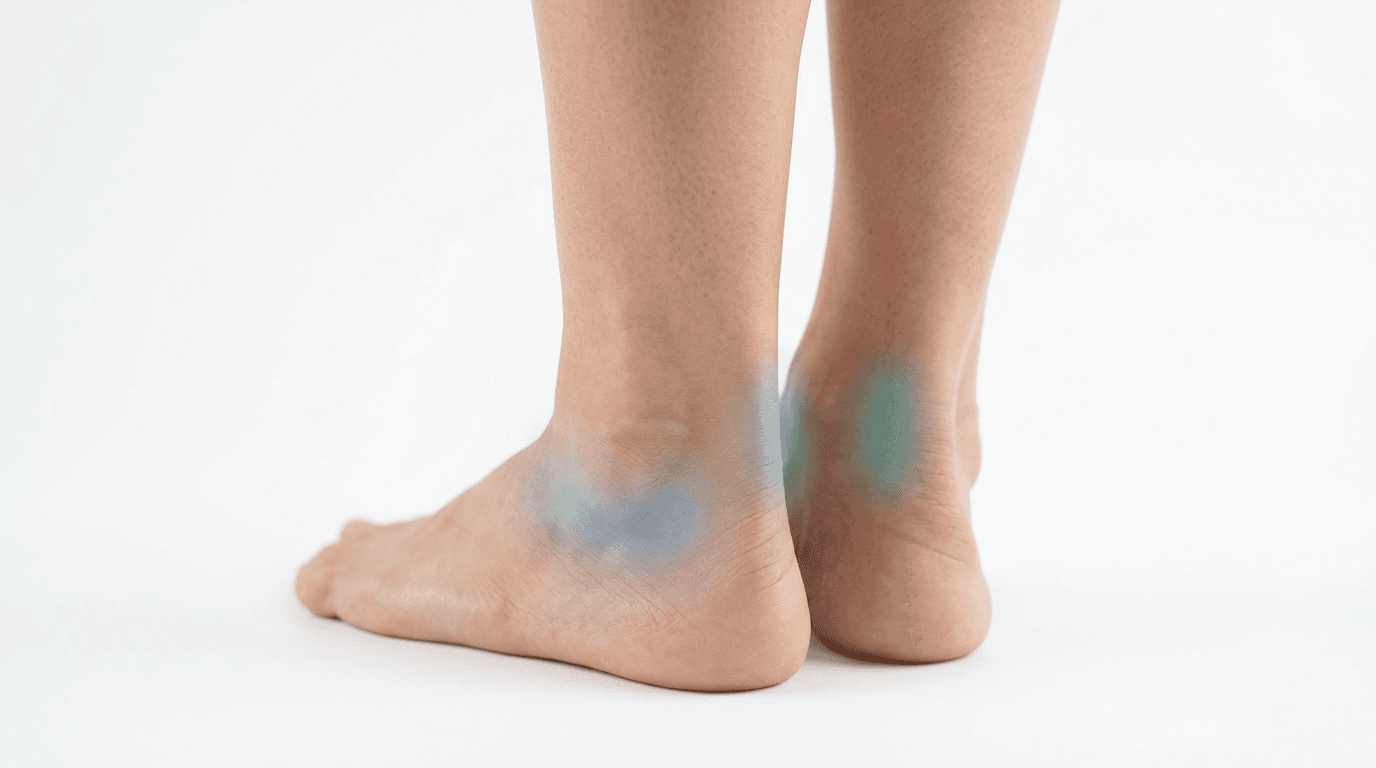
Symptoms
- ✓Pain on outer or inner ankle
- ✓Instability or insecurity sensation when walking
- ✓Burning, tingling or numbness sensations
- ✓Radiation toward sole or toes
- ✓Pain after a sprain or repeated sprains
Treatments
- ✓Custom foot orthotics
- ✓Activity and load adjustment
- ✓PRP and hyaluronic acid
- ✓Surgery (last resort)
Sinus Tarsi: What is it?
The sinus tarsi is an anatomical space between the talus and calcaneus, at the outer aspect of the ankle. Sinus tarsi syndrome corresponds to pain or instability from this region, often associated with ligamentous or biomechanical involvement.
Symptoms may include pain on the outer ankle, instability or insecurity sensation when walking, increased pain on uneven terrain and pain after a sprain or repeated sprains. Clinical data associate the syndrome with repeated ankle sprains, chronic instability, biomechanical imbalances, flat foot or hyperpronation and repeated mechanical overload.
Tarsal Tunnel Syndrome
Tarsal tunnel syndrome corresponds to compression of the posterior tibial nerve or its branches, in an anatomical canal on the inner aspect of the ankle. It is a nerve condition, distinct from mechanical or joint pain.
Symptoms may include pain on the inner ankle, burning, tingling or numbness sensations, radiation toward the sole or toes and symptoms increased with prolonged standing or walking. Neurological symptoms are a key element of differential diagnosis. Associated factors include biomechanical imbalances, flat foot or hyperpronation, previous trauma, local edema or inflammation and prolonged mechanical overload.
Podiatric Evaluation
Management begins with a complete podiatric evaluation: clinical examination of the ankle and foot, biomechanical analysis, gait observation, targeted clinical tests and trauma history evaluation. Ultrasound and X-ray can complete the diagnosis.
Management Options
Conservative Approaches
Custom foot orthotics when indicated, activity and load adjustment, personalized clinical advice and shoe modifications.
Advanced Therapeutic Modalities
When symptoms persist: PRP (platelet-rich plasma) in certain targeted situations, hyaluronic acid when relevant, other complementary modalities adapted to the condition.
Surgery
In some situations, and only after failure of conservative and advanced treatments, surgical options may be discussed as a last resort, whether for sinus tarsi or tarsal tunnel.
When to See a Podiatrist?
Consultation is recommended if pain persists or worsens, if there is instability or neurological symptoms, if pain limits daily or sports activities or if ankle sprains are repeated.
Do you have ankle or foot pain in Laval, with instability sensation or nerve symptoms? Book an appointment with a podiatrist at Clinique podiatrique de l'Avenir for a complete evaluation and care in accordance with current standards.
Frequently Asked Questions
What is the sinus tarsi?
The sinus tarsi is an anatomical space between the talus and calcaneus, at the outer aspect of the ankle. The syndrome corresponds to pain or instability from this region, often associated with ligamentous or biomechanical involvement.
What is tarsal tunnel syndrome?
Tarsal tunnel syndrome corresponds to compression of the posterior tibial nerve or its branches, in a canal on the inner aspect of the ankle. It is a nerve condition, distinct from mechanical or joint pain.
How to distinguish sinus tarsi from tarsal tunnel?
A podiatric evaluation is essential to differentiate these two conditions. Tarsal tunnel is characterized notably by neurological symptoms (burning, tingling, numbness).
This content is for informational purposes and does not replace a professional consultation.