
Plantar wart: causes, symptoms and treatments
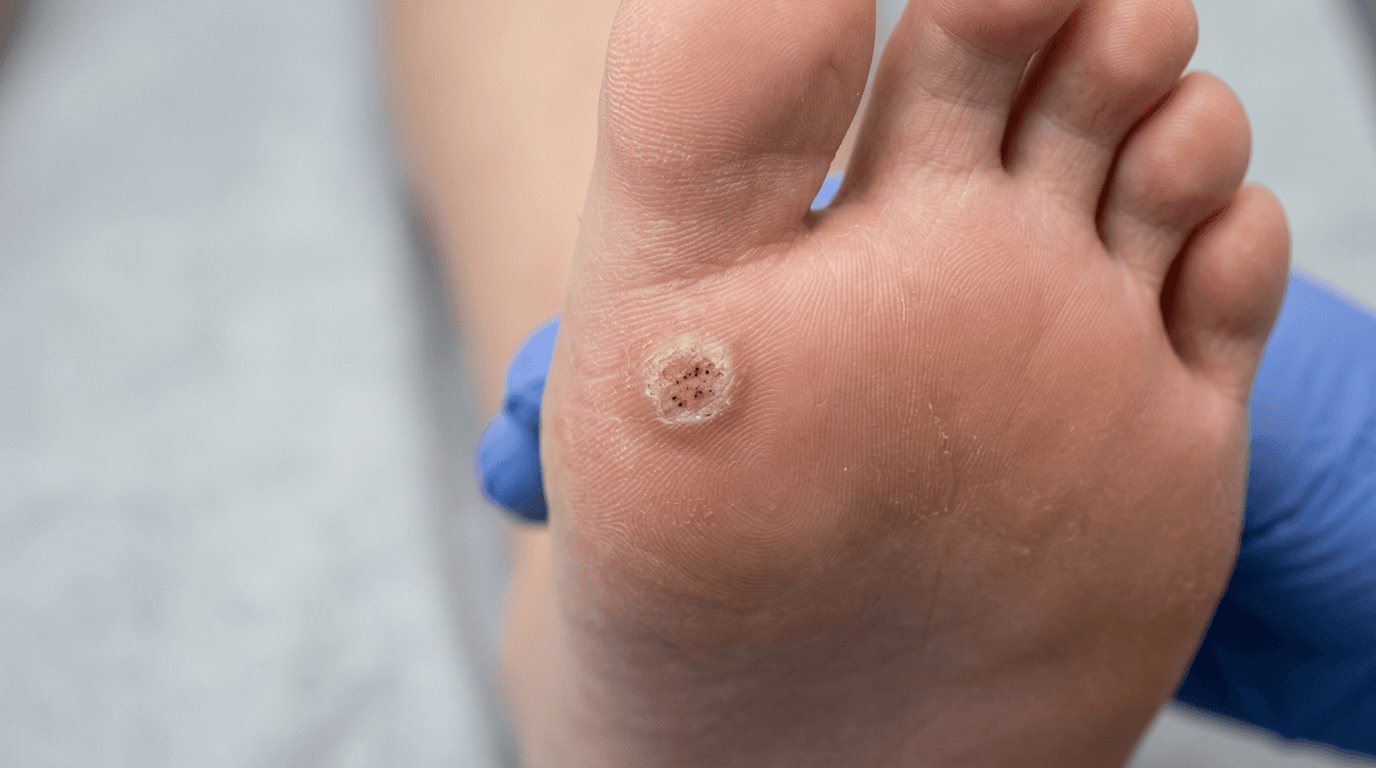
Symptoms
- ✓Rough, rounded lesion on the sole of the foot
- ✓Pain on direct pressure or lateral pinching
- ✓Small black dots in the center of the lesion
- ✓Interruption of skin lines around the lesion
- ✓Feeling of walking on a pebble
Treatments
- ✓Cryotherapy (liquid nitrogen)
- ✓Salicylic acid application
- ✓Debridement (curettage)
- ✓Laser treatment
What is a plantar wart?
A plantar wart is a benign skin lesion caused by the human papillomavirus (HPV). It develops on the sole of the foot, often under pressure-bearing areas such as the heel or the forefoot. Although not dangerous, it can become painful and spread if left untreated.
At our Laval clinic, our podiatrists regularly treat plantar warts in patients of all ages. We offer several therapeutic approaches to effectively eliminate warts and prevent recurrences.
How do you get a plantar wart?
HPV enters the skin through tiny cuts or cracks on the sole of the foot. The virus is primarily transmitted in warm, humid environments:
- Pools and spas: the wet surfaces around pools are a breeding ground for the virus
- Public showers and locker rooms: walking barefoot in these areas increases the risk of infection
- Direct contact: touching an existing wart can spread the virus to other areas of the foot
Some people are more vulnerable to HPV, particularly children and teenagers, immunosuppressed individuals and those who perspire heavily from their feet.
Recognizing a plantar wart
Plantar warts have distinctive characteristics:
- Rough lesion: thickened, granular surface, often covered with callus (hyperkeratosis)
- Black dots: small black dots in the center, corresponding to thrombosed capillaries
- Interrupted skin lines: the dermatoglyphs (skin lines) go around the lesion rather than passing through it
- Pain on pinching: the wart is painful when pinched laterally, unlike a corn which hurts under direct pressure
- Mosaic warts: several warts may merge and form a larger plaque
Treatments offered at our clinic
The choice of treatment depends on the size, number and location of the warts, as well as the patient's age.
Cryotherapy (liquid nitrogen)
Cryotherapy involves freezing the wart using liquid nitrogen at -196 °C. This treatment destroys the infected cells and stimulates the immune response. Several sessions spaced two to three weeks apart are generally required.
Acid applications
The controlled application of salicylic acid or other keratolytic agents progressively destroys the layers of the wart. This treatment can be combined with home care between appointments.
Debridement
Debridement involves removing the thickened skin layers covering the wart to expose the infected tissue. It is often performed as preparation for other treatments to improve their effectiveness.
Laser treatment
The vascular laser targets the blood vessels that supply the wart, depriving the infected tissue of its blood supply. This technique is particularly useful for stubborn warts that resist other treatments.
When should you see a podiatrist?
See a podiatrist if the wart is painful when walking, if it is growing or multiplying, if over-the-counter treatments have not worked after eight weeks, or if you are diabetic or immunosuppressed. A professional diagnosis also confirms that the lesion is indeed a wart and not another type of skin condition.
Preventing plantar warts
- Wear sandals in pools, public showers and locker rooms
- Keep your feet clean and dry
- Avoid touching existing warts (your own or other people's)
- Do not share towels, socks or shoes
- Promptly treat small cuts or cracks on the soles of your feet
- Strengthen your immune system through a healthy diet and adequate sleep
Frequently Asked Questions
How can you tell if it is a plantar wart or a corn?
A plantar wart has small black dots in its center (thrombosed capillaries) and interrupts the natural skin lines. A corn, on the other hand, preserves the visible skin lines and is caused by friction or pressure. Pain upon lateral pinching is also more typical of a wart. Your podiatrist can confirm the diagnosis with certainty.
How long does it take to cure a plantar wart?
Treatment duration varies depending on the size and depth of the wart. Small, recent warts may disappear within 2 to 4 weeks of treatment. Larger or more stubborn warts may require several months and combined treatments. Persistence is the key to success.
Are plantar warts contagious?
Yes, plantar warts are caused by the human papillomavirus (HPV) and are contagious. The virus is transmitted through direct or indirect contact in humid environments such as pools, public showers and locker rooms. Wear sandals in these areas to protect yourself.
This content is for informational purposes and does not replace a professional consultation.