
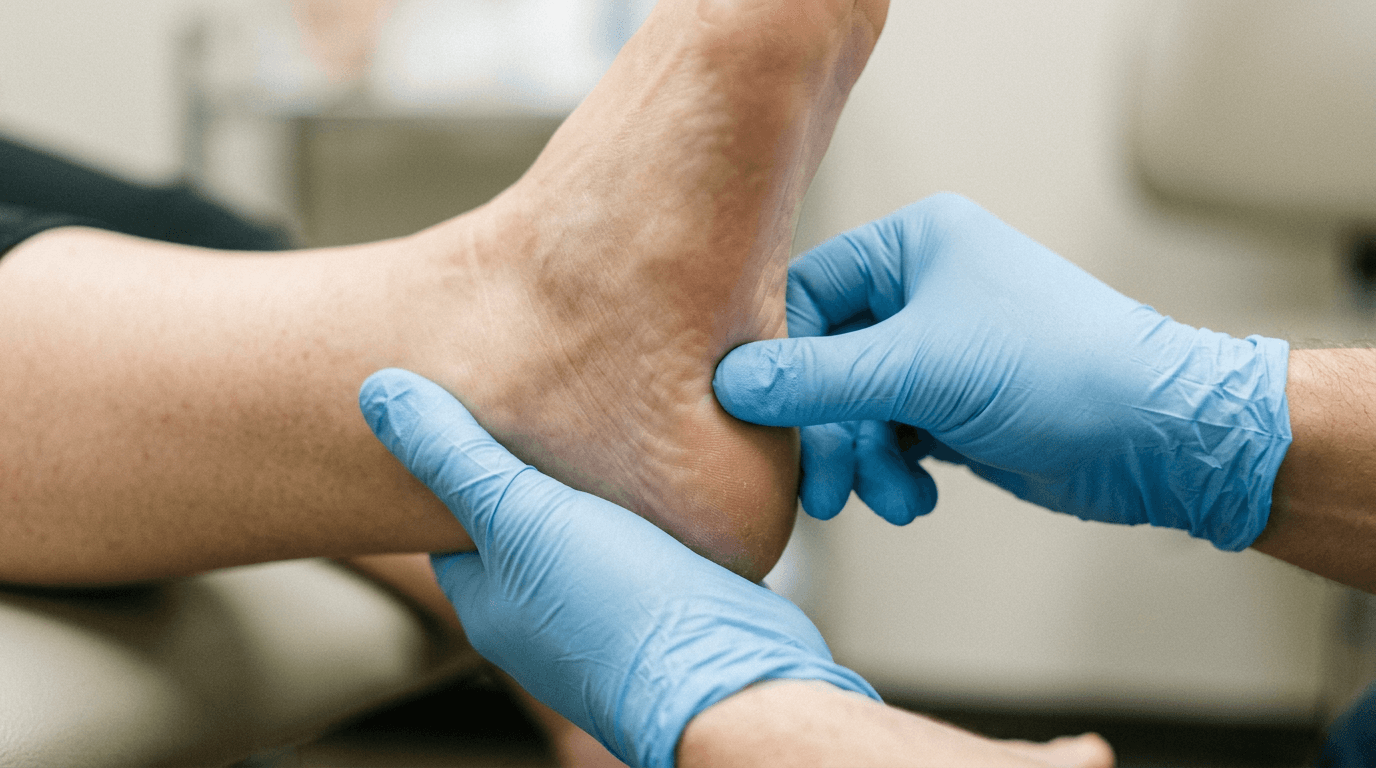
Plantar fasciitis is one of the most common causes of heel pain. It affects approximately 10% of the population during their lifetime and is one of the most frequent reasons for consultation at our podiatric clinic in Laval.
What Is Plantar Fasciitis?
Plantar fasciitis is an inflammation of the plantar fascia, a thick band of connective tissue that connects the heel bone (calcaneus) to the toes. This tissue plays an essential role in supporting the arch and absorbing shock during walking.
Main Causes
Several factors can contribute to the development of plantar fasciitis:
- Mechanical overload: prolonged standing, excessive walking or running
- Flat feet or high arches: biomechanical abnormalities that increase tension on the fascia
- Excess weight: increased pressure on the structures of the foot
- Inadequate footwear: lack of support or worn-out soles
- Age: more common between 40 and 60 years of age
- Sports activities: running, dancing, impact sports
Symptoms to Watch For
The most characteristic symptom of plantar fasciitis is a sharp pain in the heel, particularly:
- In the morning with the first steps: the pain is often most intense after a period of rest
- After prolonged sitting: pain when resuming walking
- After physical activity: the pain increases gradually
- Tenderness to pressure: pain when pressing under the heel
Treatments Offered at Our Clinic
At the Clinique Podiatrique de l'Avenir, our podiatrists offer a comprehensive and personalized treatment approach:
Conservative Treatments
- Custom foot orthotics: pressure redistribution and arch support
- Stretching exercises: personalized program for the plantar fascia and calf
- Shockwave therapy: stimulation of tissue healing
- Podiatric taping: temporary support of the fascia
Advanced Treatments
- PRP treatment (platelet-rich plasma): regenerative approach for chronic cases
- Injections: rapid relief of inflammation in severe cases
When Should You See a Podiatrist?
See a podiatrist if:
- Heel pain has persisted for more than two weeks
- The pain prevents you from walking normally
- Home treatments (rest, ice, stretching) are not providing relief
- The pain is getting progressively worse
Prevention
To prevent plantar fasciitis:
- Wear quality shoes with good support
- Maintain a healthy weight
- Stretch your calves and plantar fascia regularly
- Gradually increase the intensity of your sports activities
- See a podiatrist for a preventive biomechanical assessment
Learn More
This article is written by Dre Louana Ibrahim, podiatrist and founder of the Clinique Podiatrique de l'Avenir in Laval. For a personalized diagnosis, book an appointment with our team.
Related on this site
Conditions
Services
Need help with your feet?
Our podiatrists in Laval are here to help. Book a consultation today.
Book an appointment