
By Dre Marie-Christine Torchon··Conditions
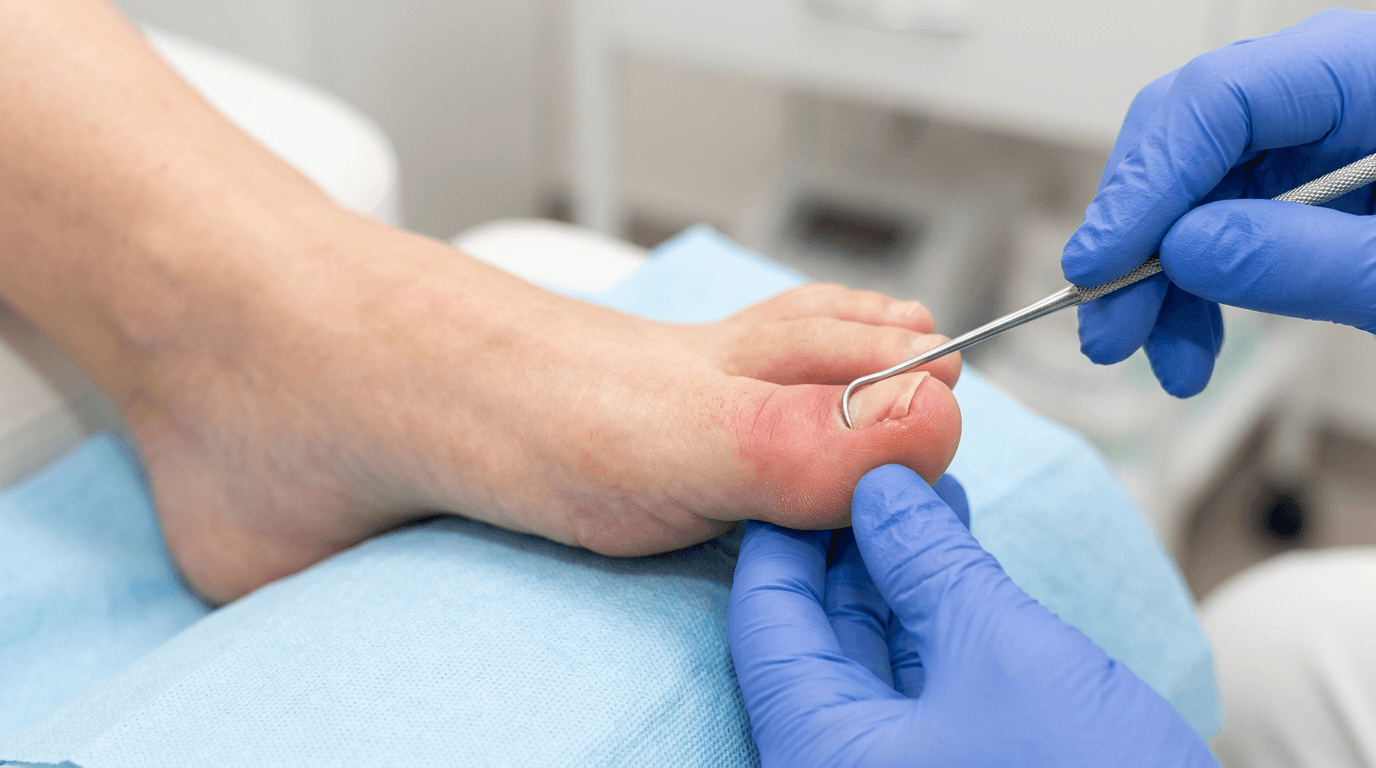
Ingrown toenails (onychocryptosis) are one of the most common and painful foot problems. An ingrown toenail occurs when the edge of the nail grows into the surrounding skin, causing pain, redness and sometimes infection.
Common Causes
Mechanical Factors
- Improper nail trimming: cutting nails too short or rounded instead of straight across
- Shoes that are too tight: lateral pressure on the toes
- Trauma: impact to the toe, repetitive pressure (sports, safety footwear)
Anatomical Factors
- Natural nail shape: nails that are naturally curved (involuted)
- Hyperhidrosis: excessive sweating that softens the skin
- Heredity: family tendency toward ingrown toenails
Risk Factors
- Diabetes: slower healing and increased risk of infection
- Circulatory problems: reduced blood supply to the feet
- Adolescence: rapid growth and increased sweating
Stages of Severity
Stage 1 — Mild
- Redness and slight pain on the side of the nail
- Sensitivity to pressure
- No visible infection
Stage 2 — Moderate
- More intense pain
- Marked redness and swelling
- Possible serous discharge (clear fluid)
Stage 3 — Severe
- Infection with purulent discharge
- Formation of granulation tissue (overgrowth of flesh)
- Intense pain even at rest
When Should You See a Podiatrist?
See a podiatrist immediately if:
- The ingrown toenail shows signs of infection (pus, widespread redness, warmth)
- You are diabetic or have circulatory problems
- The problem keeps recurring
- Home treatments have not improved the situation after 2-3 days
Professional Treatments
Conservative Treatment
For mild to moderate cases, your podiatrist can:
- Lift the nail edge and place cotton or a wick to guide regrowth
- Apply an antiseptic treatment
- Prescribe antibiotics if necessary
- Advise on proper nail trimming
Minor Surgery (Partial Matricectomy)
For recurrent or severe cases:
- Procedure performed under local anaesthesia in the office
- Removal of the ingrown nail edge
- Application of a chemical agent to prevent regrowth of the problematic edge
- Healing in 2 to 4 weeks
- Very low recurrence rate (less than 5%)
Prevention: Good Habits
How to Properly Trim Your Toenails
- Cut your nails straight across, without rounding the corners
- Do not cut them too short — leave 1-2 mm of free edge
- Use a proper nail clipper (not scissors)
- Lightly file the corners to avoid sharp edges
Shoes and Socks
- Wear shoes with enough room for your toes
- Avoid pointed shoes and high heels on a daily basis
- Change your socks daily
- Choose socks made of natural materials (cotton, merino wool)
Foot Hygiene
- Wash your feet daily with lukewarm water and mild soap
- Dry thoroughly between the toes
- Moisturize the skin around the nails (not on the nails)
The Special Case of Diabetic Patients
If you are diabetic, ingrown toenails require special attention:
- Never attempt to treat an ingrown toenail yourself
- See your podiatrist at the first signs
- A regular foot examination (every 3 to 6 months) is recommended
- The risk of infection and complications is significantly higher
Learn More
This article is written by Dre Marie-Christine Torchon, podiatrist at the Clinique Podiatrique de l'Avenir in Laval. For safe and effective ingrown toenail treatment, book an appointment with our team.
Related on this site
Conditions
Need help with your feet?
Our podiatrists in Laval are here to help. Book a consultation today.
Book an appointment